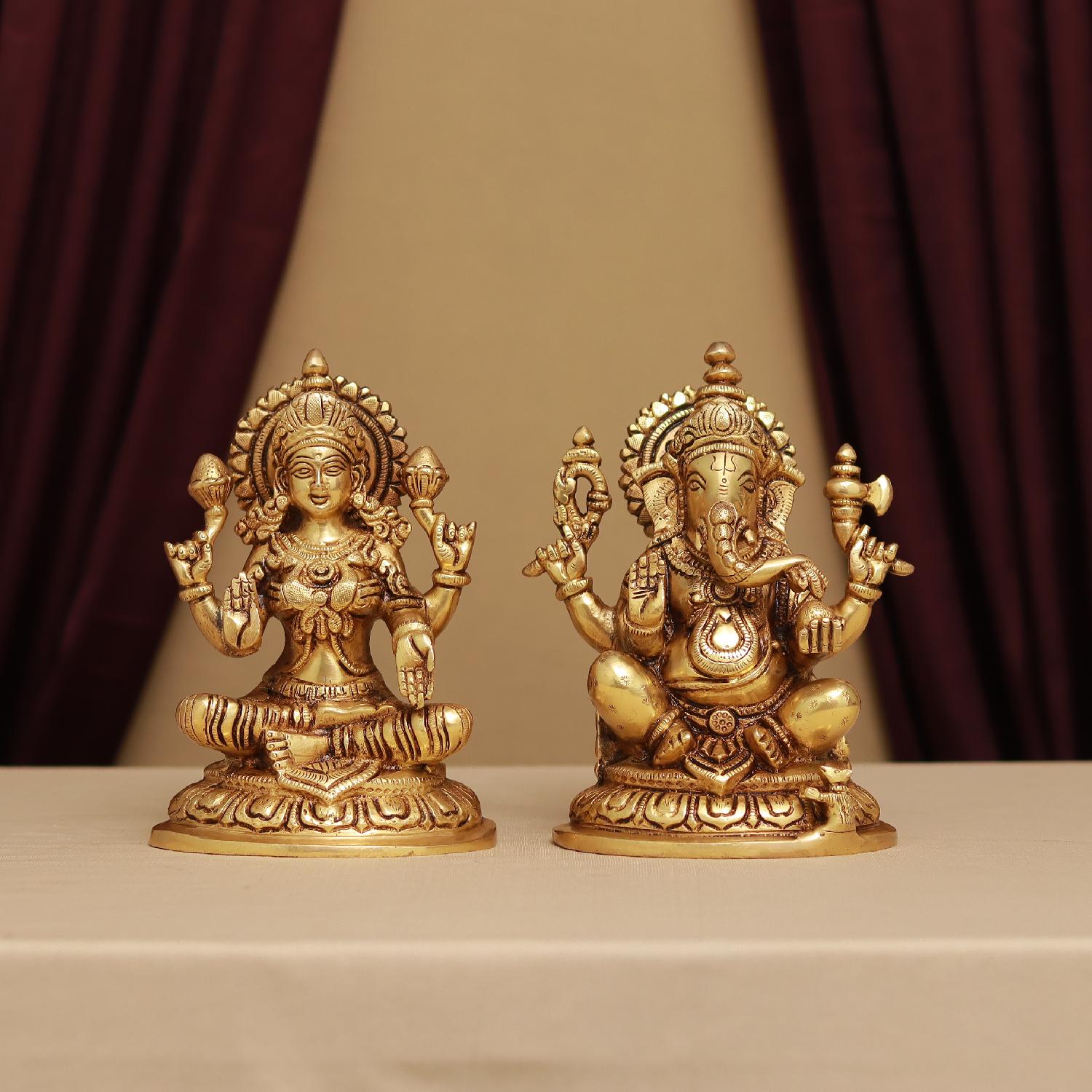
Quick summary
- Easiest setup: murti faces west, you face east during pooja.
- Murti facing east (you face west) is also fine; most guides avoid a murti facing south.
- The mandir itself is best in the north-east part of the home (ishan kon).
- Use the compass app on your phone to find east before you fix the mandir.
- Hanuman ji is traditionally also kept facing south; Kuber ji on the north side.
For the direction of idols in pooja room, remember one easy pair: keep the murti facing west, so that you face east when you sit for pooja. If your room does not allow that, the murti can face east and you face west. Most vastu guides say the murti should not face south, and the mandir itself is best kept in the north-east part of the home.
That is the short answer. The rest of this guide clears up the one thing that confuses almost everyone, gives a simple way to find east in your own room with a phone, and lists what is traditionally followed for Ganesh ji, Lakshmi ji, Kuber ji and Hanuman ji.
Whose direction is it: the murti’s or yours?
Read five vastu pages and you will find “east” written in all of them, but with different meanings. One page says “keep the idol in the east”, another says “the idol should face east”, a third says “you should face east”. These are not the same thing.
When a guide says east, ask one question: is that where the murti is kept, the way the murti looks, or the way you look while praying? A murti kept on the east wall looks towards the west, and you, sitting in front of it, look towards the east. All three lines can be describing the same setup.
So in this post we always say it one way: the way the murti faces (the direction its face looks) and the way you face (the direction you look during pooja). They are always opposite to each other.
| Murti faces | You face | What most guides say |
|---|---|---|
| West | East | First choice. You look towards the rising sun during pooja. |
| East | West | Also fine. Many homes use this when the east wall is not free. |
| North | South | Many guides allow it for the murti, but they do not like you facing south. |
| South | North | Most guides avoid it. Hanuman ji is the known exception (see below). |
Find east in your room in two minutes
Most people guess the directions from the sunrise and get it a little wrong. A phone does it better.
- Open a compass app. Most phones have one built in. Keep the phone flat on your palm, away from the fridge, the TV and steel almirahs, because metal can disturb the reading.
- Stand in the middle of the room where the mandir will be, and turn slowly until the app shows east (90 degrees).
- Mark the wall. The wall in front of you is the east wall. A mandir on that wall means the murti faces west and you face east.
- Check the north-east corner. Turn halfway between north and east (45 degrees). That corner of the home is called the ishan kon and is traditionally the first choice for a mandir.
Do this once before you buy a wooden mandir or fix a shelf. It also tells you how much space you have on that wall, which decides the murti size. Our idol size guide shows how to measure the inside of the mandir.
Deity by deity: what is traditionally followed
The general rule above works for every murti. A few deities have their own traditions as well. Families and regions follow these differently, so take them as a guide and keep your family custom first.
Ganesh ji
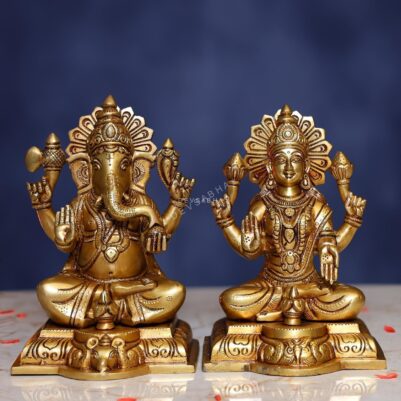
Ganesh ji is traditionally kept in the north-east part of the home, in the mandir with the other deities. Most vastu guides say his murti should not face south. Many families also keep a small Ganesh near the main door, facing inside. Before you buy, look at the trunk too; our post on Ganesh idol trunk direction explains which one most homes choose.
Lakshmi ji with Ganesh ji
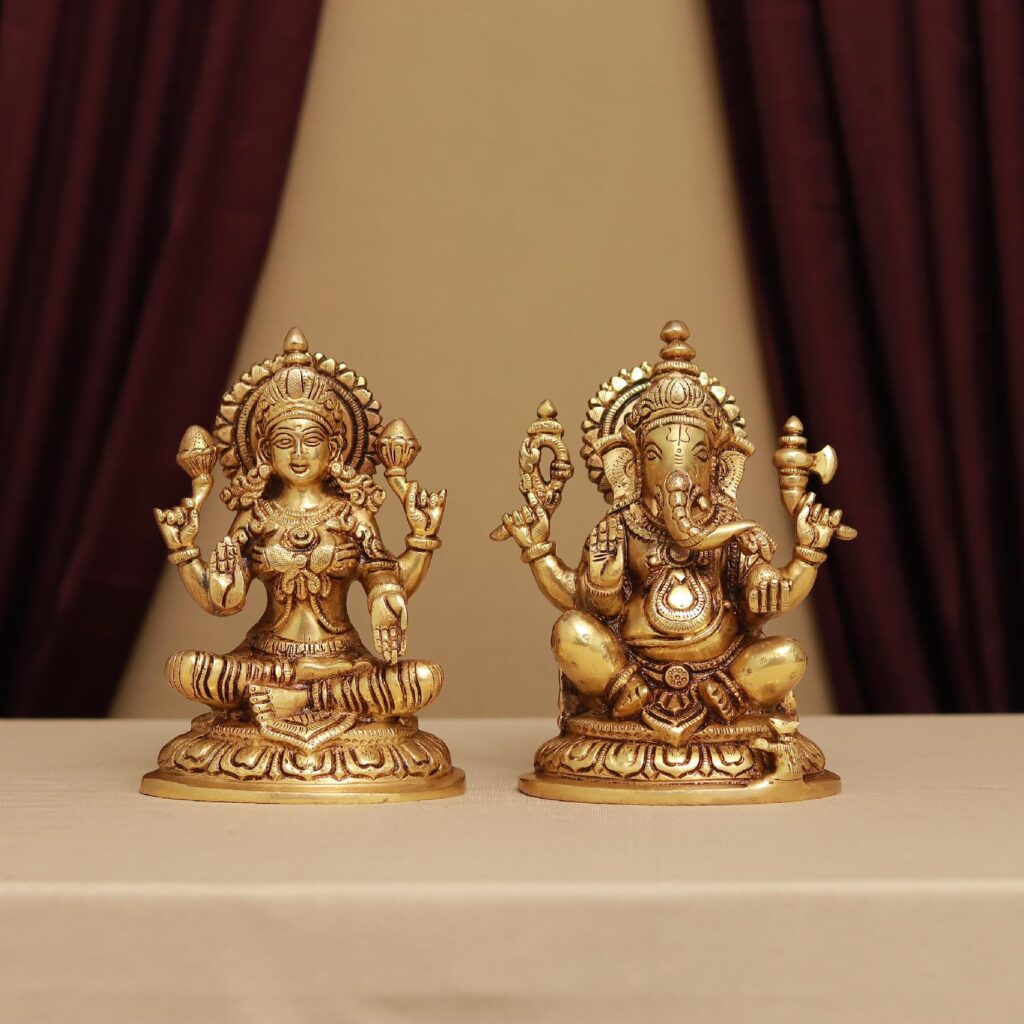
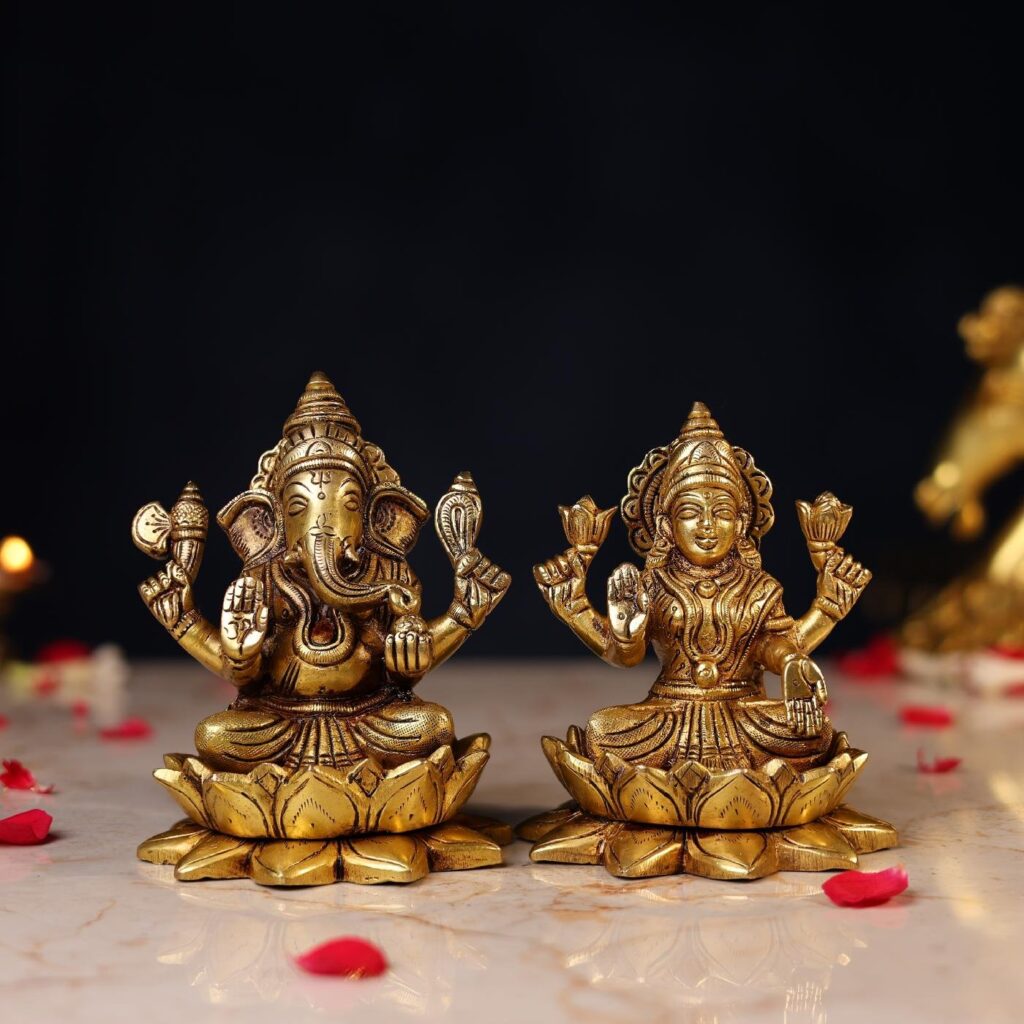
Lakshmi ji and Ganesh ji are kept side by side, facing the same way. Which one sits on which side is where families differ. Many pandits and Hindi vastu pages say Lakshmi ji should be on Ganesh ji’s right side. Remember that his right is your left when you face them. Other families keep them the other way round. If your home already has a custom, follow it.
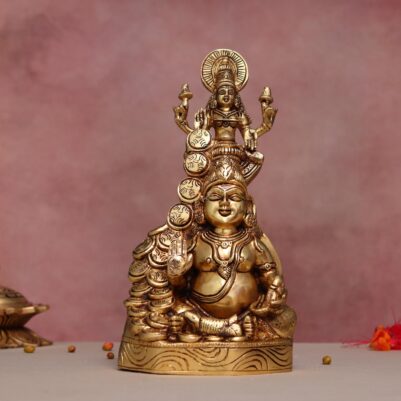
Kuber ji
Kuber ji is traditionally the guardian of the north, so many families keep his murti in the north part of the home or of the mandir. Guides do not agree on which way he should face: some say towards the north-east, some say towards the main door. Pick the north side first, then keep the face where you can see it clearly every day.

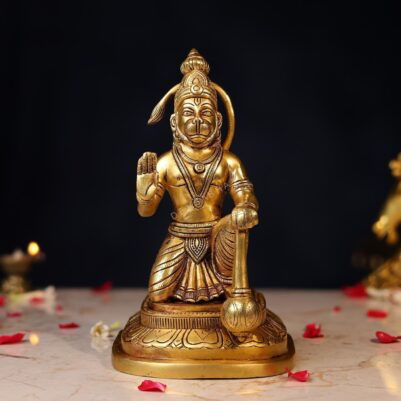
Hanuman ji
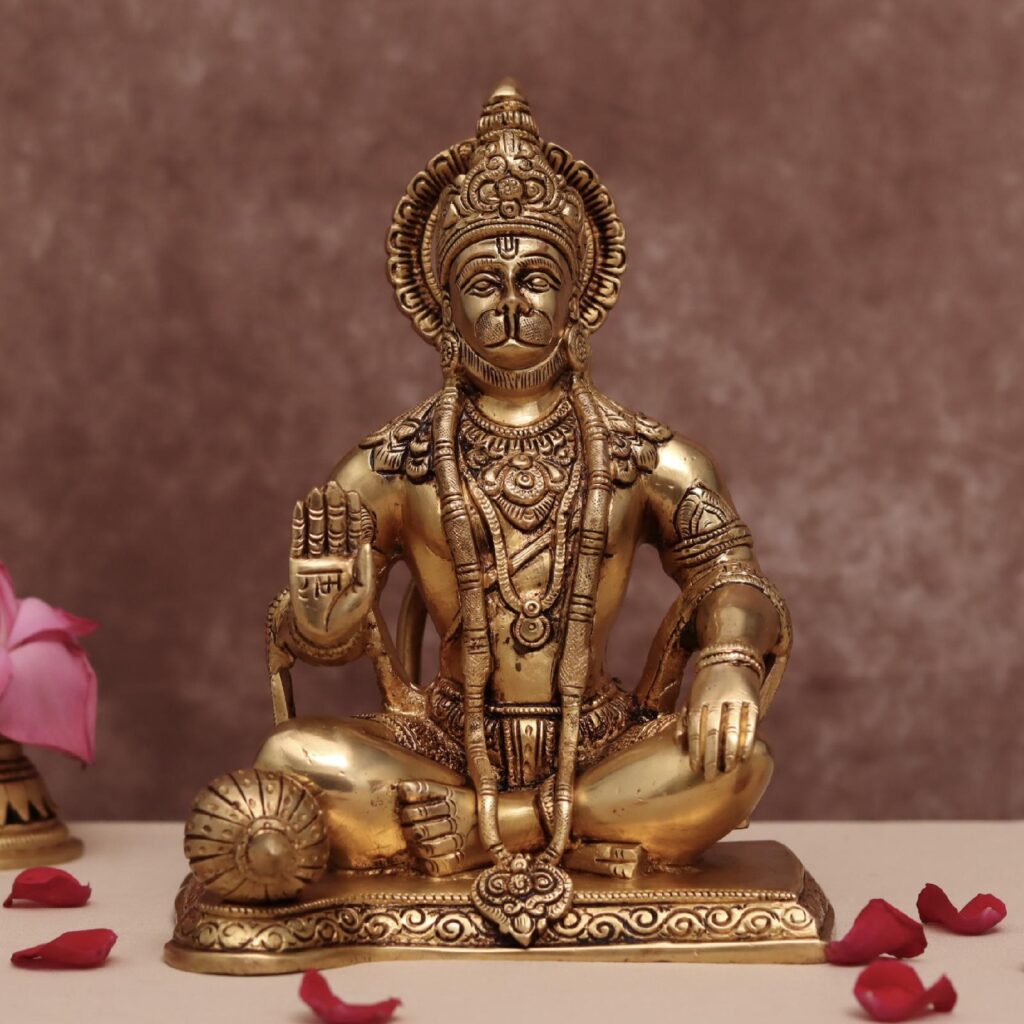
Hanuman ji is the one deity often kept facing south. A south facing Hanuman is called Dakshinmukhi Hanuman, and many families and temples keep him this way by tradition. If that does not suit your room, keep him with the other murtis in the mandir, facing the same way as them.
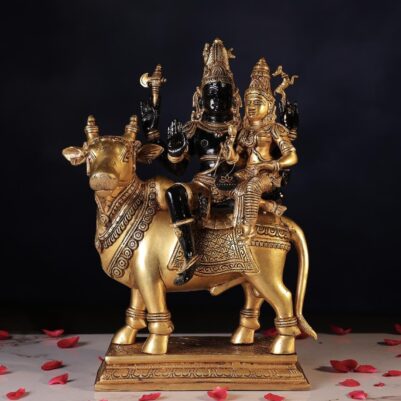
Family idols: Shiva Parvati, Ram Darbar, Radha Krishna
A family idol is one murti, so it simply follows the general rule: face west or east. When you keep separate murtis, put them side by side on one level, all facing the same way. Most guides say two murtis should not face each other across the room.
Height, wall and spacing
- Height: many families keep the murti so that its feet are about at your chest level when you sit or stand for pooja. You should not have to look down at the face.
- Wall: leave a small gap between the murti and the back wall. Air moves, and you can clean behind it.
- Spacing: do not crowd the shelf. Leave room in front for a diya, a small plate and flowers.
- Avoid: under the stairs, a wall shared with a bathroom, and a bedroom spot where your feet point towards the mandir while you sleep. Most guides agree on these three.
If your flat has no free east or west wall, choose the cleanest, calmest place where you can sit in front of the murti every day. A direction is a guideline, not a reason to skip pooja.
Questions people ask about murti direction
Can the murti face south?
Most vastu guides say no, for every deity except Hanuman ji, who is traditionally kept facing south too. If south is the only option in your home, many families keep the murti facing east or west on a different wall, even if the mandir is smaller.
Which direction should I face while doing pooja?
East first, then north, then west. Facing east is the most common advice because you look towards the sunrise. Then the murti faces west.
Ghar ke mandir me bhagwan ka mukh kis disha me hona chahiye?
Simple jawab: bhagwan ka mukh pashchim (west) ki taraf, taaki pooja karte samay aapka mukh purv (east) ki taraf rahe. Yeh na ho sake to bhagwan ka mukh purv ki taraf rakhiye. Dakshin (south) ki taraf mukh zyadatar log nahi rakhte, Hanuman ji ko chhod kar.
Can two murtis face each other?
Most guides say no. Keep them side by side on one shelf, all facing the same way, so that you can see every face from where you sit.
Can I keep the mandir in the bedroom?
In small homes many people do. Keep it on a wall where your feet do not point towards it while you sleep, and many families cover it with a curtain or close its doors at night.
My mandir is already on the wrong wall. What now?
Nothing to worry about. Choose a good day, clean the mandir, and move the murtis with respect to the new wall. Many families do a small pooja when they shift the mandir. Before you move a heavy brass murti, read our tips on cleaning brass idols at home so it goes into its new place shining.
So open the compass on your phone tonight, stand in your pooja room, and find east. Once you know which wall it is, setting every murti the right way takes only a few minutes.


