Quick summary
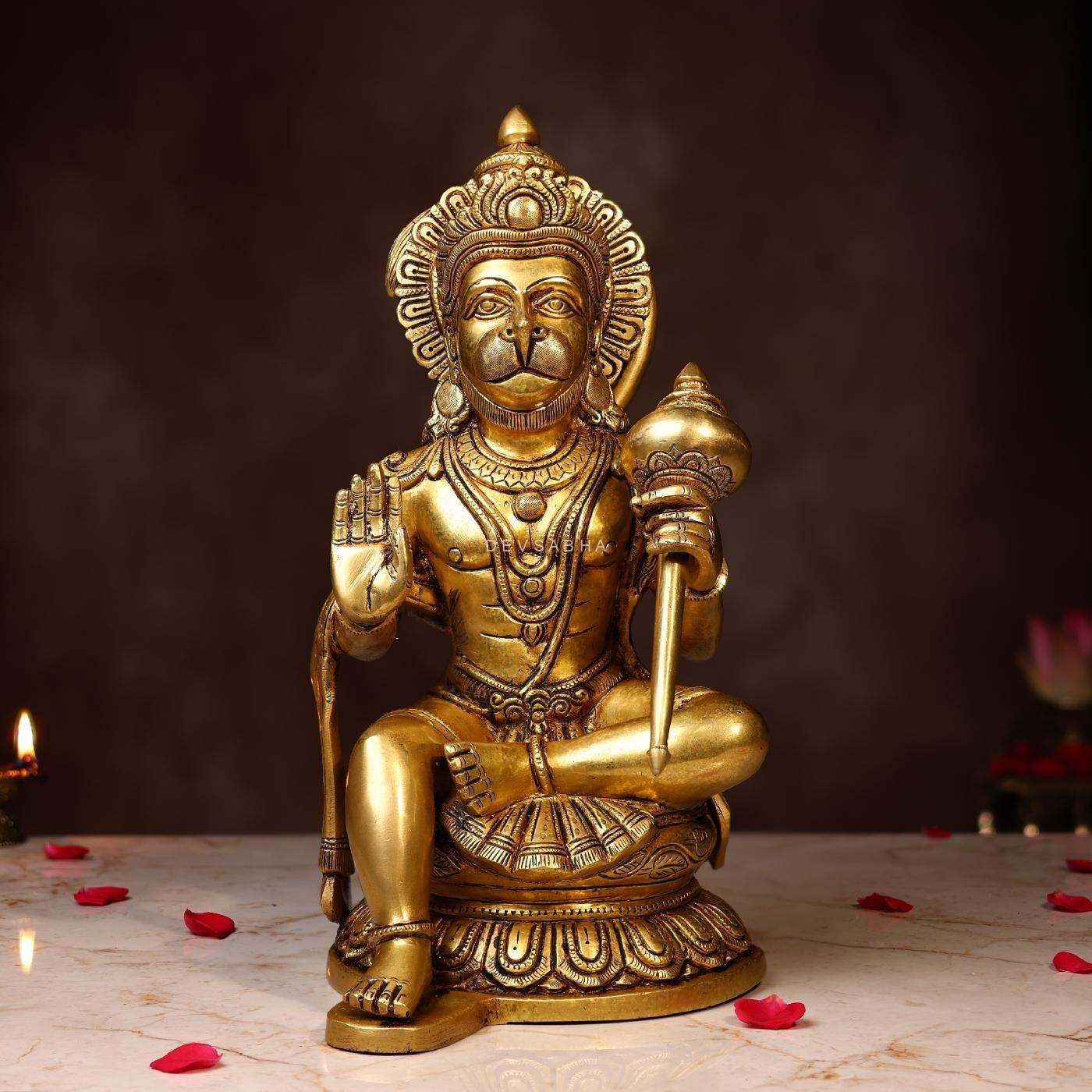
- For the home mandir, a sitting Hanuman with a blessing hand or one with folded hands is the easy pick.
- A standing Hanuman with the gada is traditionally the guardian form, often kept near the door or in the hall.
- Panchmukhi (five faces) is mostly kept by families who already worship that form.
- His blessing hand is his right hand, so you see it on your left.
- Tuesday and Saturday are traditionally his days.
Which Hanuman idol is good for home? For the home mandir, most people do well with a calm form: Hanuman ji sitting with his right hand raised in blessing, or standing with folded hands. The standing form with the gada on his shoulder is traditionally kept as the guardian form, and the five faced Panchmukhi form is mostly chosen by families who already pray to it.
There is no single right answer in the scriptures. Many of these choices are family custom. So instead of a list of rules, this guide shows you how to read the pose on a real murti, what each form is traditionally kept for, and what to check before you buy one.
An easy way to remember it: a calm Hanuman for the pooja shelf, a standing Hanuman with the gada for the guardian place, and Panchmukhi when your family already worships that form.
Hanuman forms at a glance
Use this table with the murti or the product photo in front of you. Every right and left here is Hanuman ji’s own. His right hand is on your left when you face him.
| Form | How to spot it | Traditionally kept for |
|---|---|---|
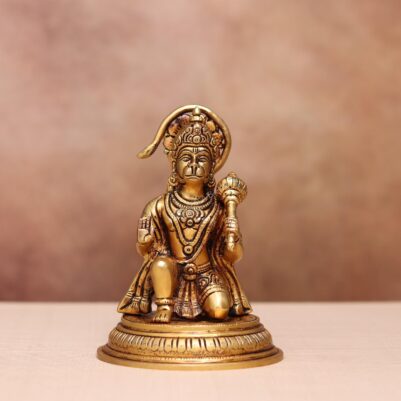
| Sitting, blessing | Legs folded, right hand raised with the palm facing you, gada in his left hand | Daily pooja in the home mandir |
| Kneeling, blessing | One knee on the base, the other raised, as if he is about to rise | Home mandir; seen as ready to serve Ram ji |
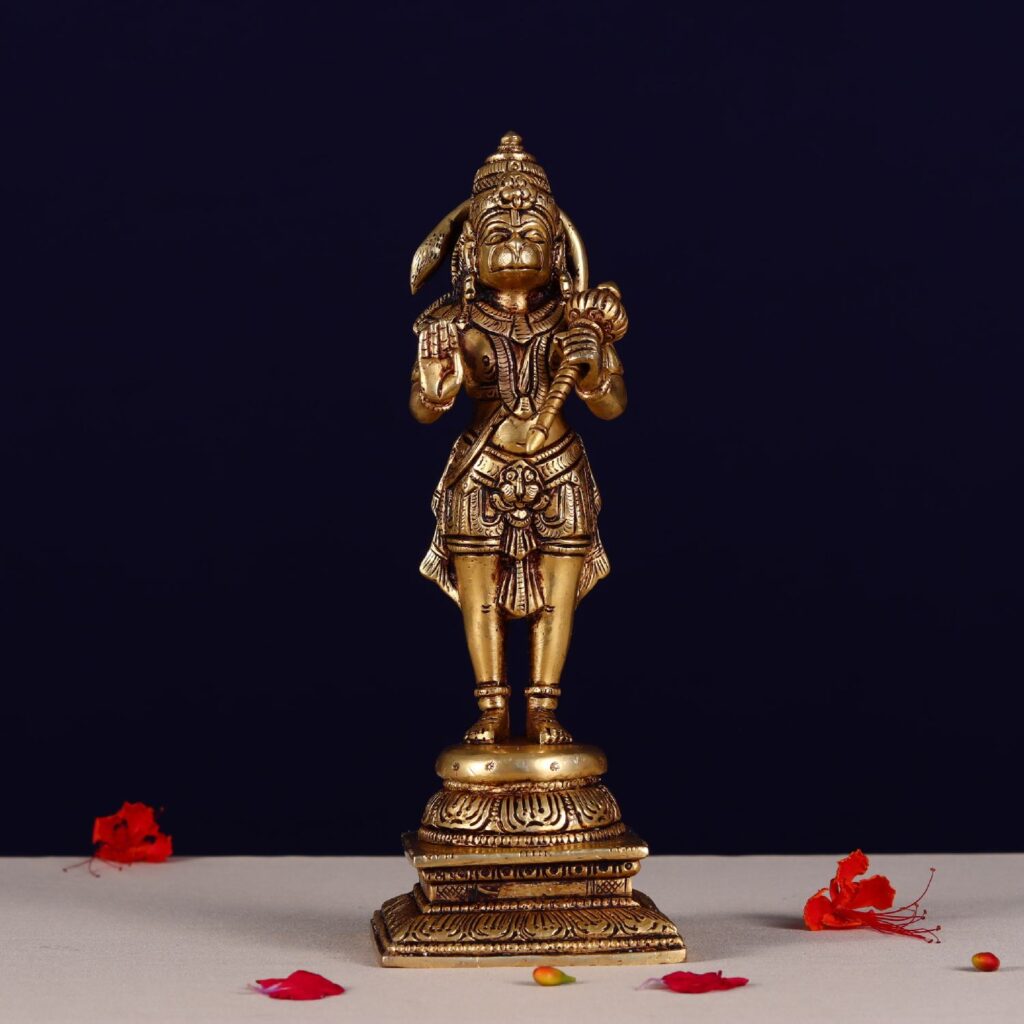
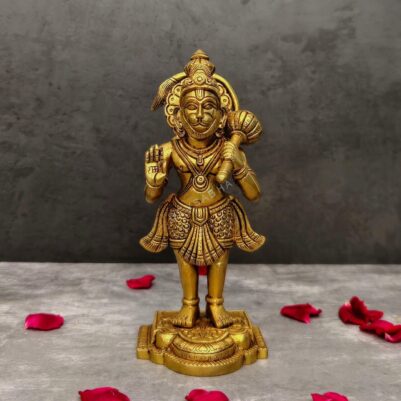
| Standing with gada | On his feet, gada held up on his left shoulder or resting by his side | The guardian form, often near a door or in a hall |
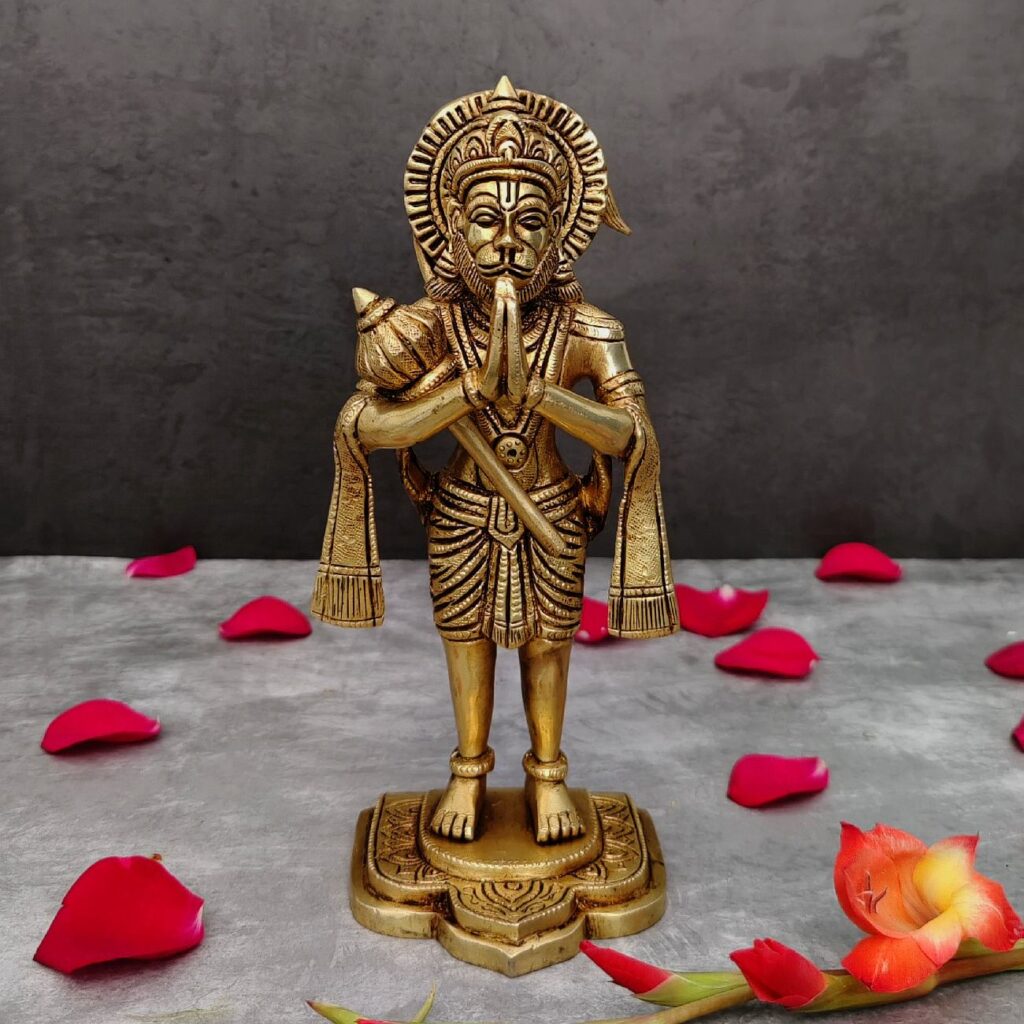
| Folded hands | Standing or sitting with both palms joined at the chest | Seen as Ram bhakt Hanuman; quiet daily pooja |
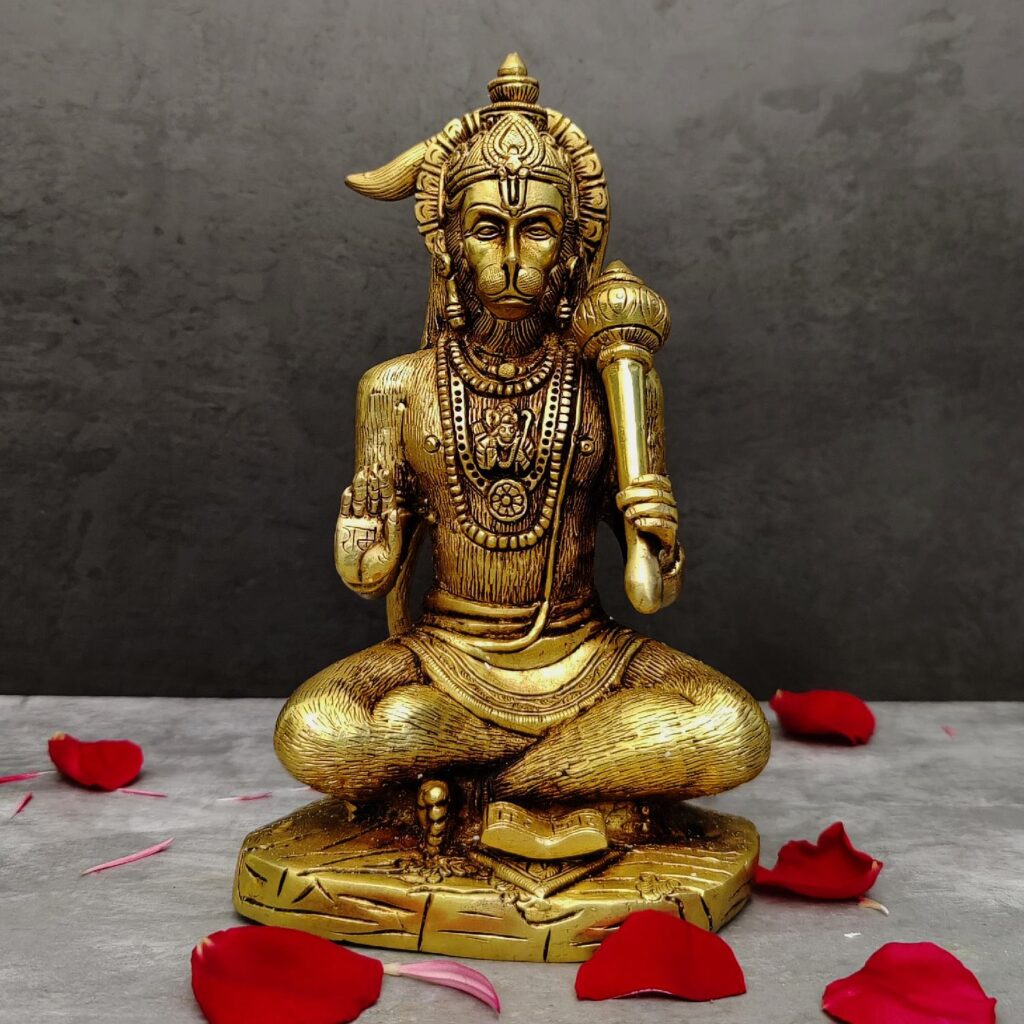
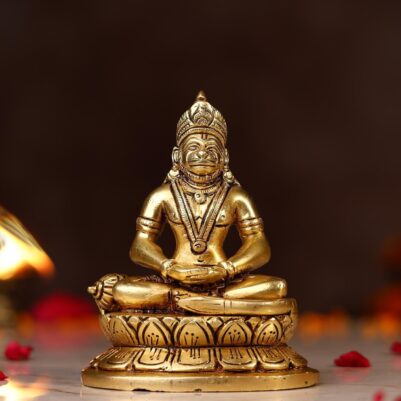
| Meditating | Legs crossed, eyes lowered, hands resting in the lap | A quiet pooja corner or study |
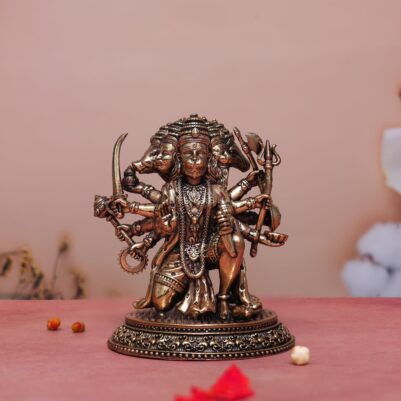
| Panchmukhi | Five faces and ten arms | Families who already pray to this form |
Each form, and what it is believed to mean
Sitting Hanuman in blessing pose
This is the form many people picture first. He sits with his legs folded, the right palm turned to you and the gada held in his left hand against the shoulder. The raised palm is the abhaya mudra, traditionally read as “do not be afraid”. Because he is seated and calm, this form is often chosen for a home mandir where the family does pooja every day.
Kneeling Hanuman with a raised hand
Here one knee rests on the base and the other is raised. In Hanuman ji’s stories he is always ready to rise and serve Ram ji, and the kneeling pose is traditionally seen that way. It is a good middle path: calmer than the standing form with the gada, a little more alive than the seated one.

Standing Hanuman with the gada
A standing Hanuman holding his gada is the guardian form, often called Veer Hanuman. Some families keep it in the hall or facing the main door, because he is believed to guard the home. In the mandir it works as well. Look at the gada: on some murtis it is held up on the shoulder, on others it rests on the ground by his left hand.
Hanuman with folded hands
With both palms joined at the chest, Hanuman ji is shown as the devotee of Ram ji. Many people keep this form next to a Ram Darbar or a Ram murti, so that Hanuman faces his Lord the way he does in temples. If your mandir already has Ram ji, this is the form to think of first.
Meditating Hanuman
In the meditating form he sits with crossed legs and lowered eyes, and his hands rest one over the other in his lap. The gada is put down, not held. It suits a small pooja corner, a study table or a room where you sit quietly.
Panchmukhi Hanuman
Panchmukhi means five faced. Traditionally the faces are Hanuman in front, Narasimha (lion), Garuda, Varaha (boar) and Hayagriva (horse), and the form has ten arms holding weapons. In the story he took this form to defeat the demon Ahiravana. It is a strong form, so many families keep it only if they already have that custom, often near the main door or in a separate place of its own.

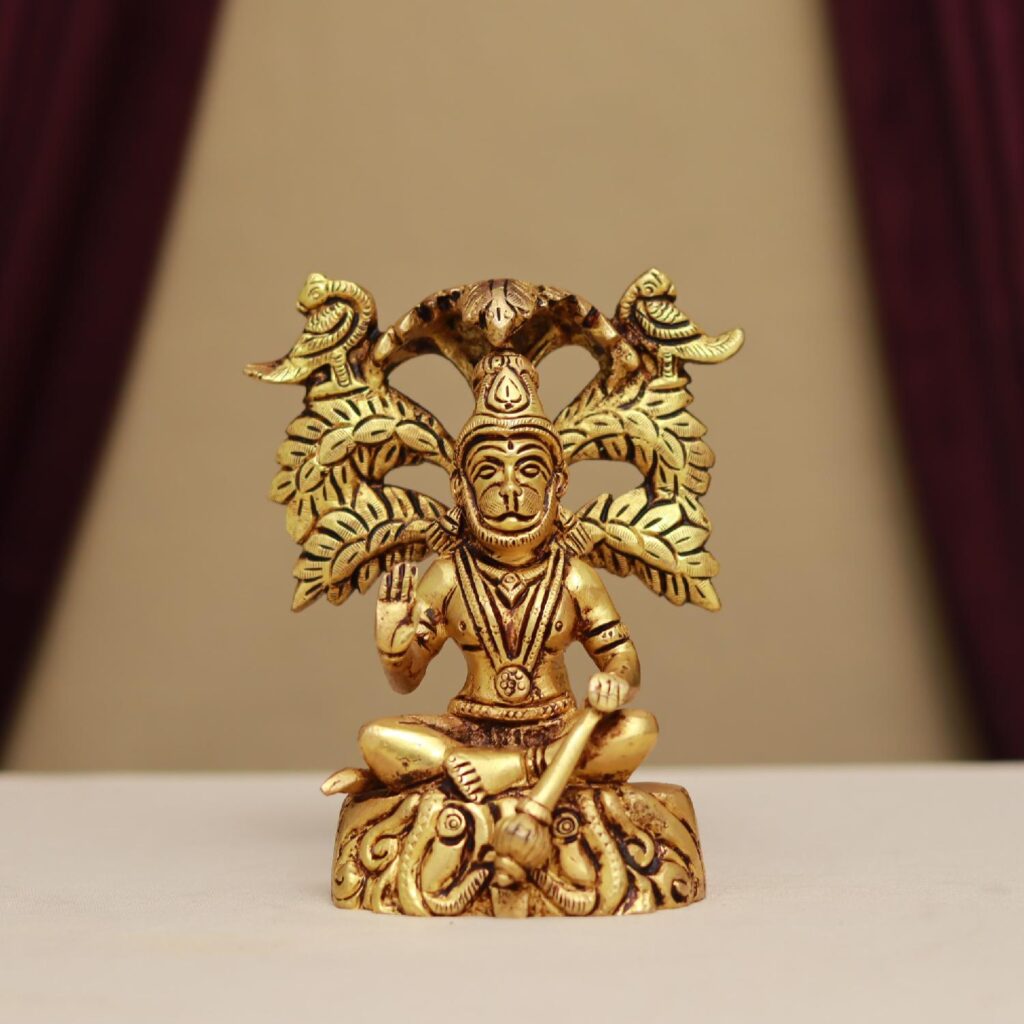
There are other forms too, like Hanuman carrying the Sanjeevani mountain or Hanuman seated under a tree, as in the small murti below. Read them the same way: first the pose, then the hands, then what he holds.
Check these five things before you buy a Hanuman murti
- The blessing hand. In most forms it is his right hand, so on the photo it is on your left. If the photo is flipped, it will look the other way round.
- The gada. Is he holding it, or does it rest on the base? Both are fine, but choose what you want to see every day.
- The face. Zoom into the photo. A good murti has clear eyes, mouth and crown lines from the chisel work done after casting.
- The base. A flat, wide base stands firm on a small shelf. Tall standing murtis need a bit more depth.
- The size. Measure the inside height of your mandir first. Our murti size guide shows how.
Where to keep a Hanuman murti at home
- In the home mandir, on a raised shelf, never on the floor.
- Traditionally, Hanuman is one deity who is also kept facing south (Dakshinmukhi Hanuman). If that does not fit your room, keep him facing the same way as the other murtis. See direction of idols in the pooja room.
- Most families do not keep a Hanuman murti in the bedroom; the pooja room or the hall is the usual place.
- Keep a calm form in the mandir and a standing form with the gada for the door or the hall, if you keep two.
Brass needs very little care. A soft dry cloth every week is enough; for a full clean, follow our brass murti cleaning guide. You can see all our forms in Hanuman idols.
Questions people ask about Hanuman murtis
Sitting or standing Hanuman: which is better for home?
Neither is wrong. A sitting Hanuman is the usual pick for daily pooja in the mandir. A standing Hanuman with the gada is traditionally kept as the guardian of the home. Choose by where you will keep him.
Can we keep a Panchmukhi Hanuman at home?
Yes, many families do. Because it is a strong form, most keep it only when it is already their custom, and give it a clean place of its own.
Which day is Hanuman ji worshipped?
Tuesday and Saturday are traditionally his days. Many people light a diya and read the Hanuman Chalisa on these days.
Can I keep Hanuman ji with Ram Darbar?
Yes. In many Ram Darbar murtis Hanuman ji already sits at Ram ji’s feet. A separate Hanuman with folded hands also goes well beside Ram ji.
Hanuman ji ki murti ghar me kaisi honi chahiye?
Ghar ke mandir ke liye baithe hue Hanuman ji, aashirwad wale haath ke saath, ya haath jode hue Hanuman ji sabse aasaan choice hai. Gada wale khade Hanuman ji ko parivar aksar ghar ki raksha ke roop me rakhte hain.
Is a red or sindoor Hanuman better than brass?
Sindoor is offered to Hanuman ji in pooja; the colour of the murti is your choice. A brass murti can be offered sindoor on Tuesdays and wiped clean with a soft cloth afterwards.
So before you choose, decide one thing: will he sit in your mandir for daily pooja, or stand guard for the whole home? Once you know that, the right form is easy to pick.


